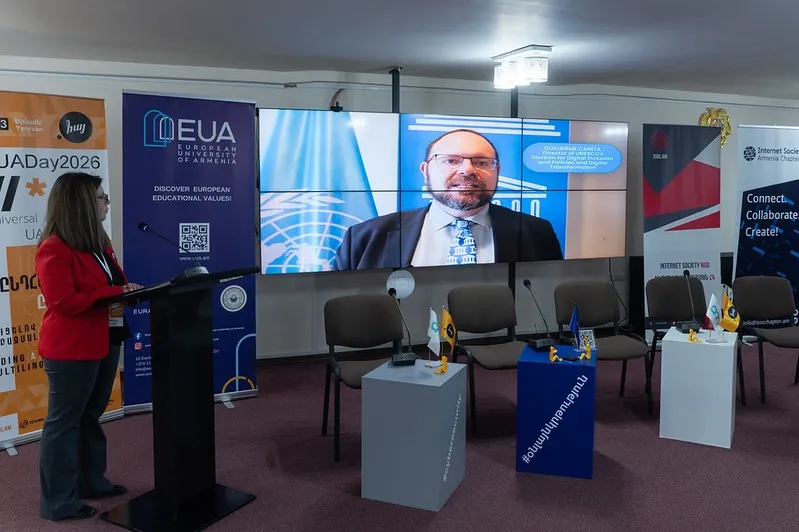
The future of the Internet must be grounded in multilingualism, inclusivity and human rights. UNESCO recognized the right to communicate in one’s native language and to access multilingual information as a fundamental right in its 2003 Recommendation concerning the Promotion and Use of Multilingualism and Universal Access to Cyberspace.
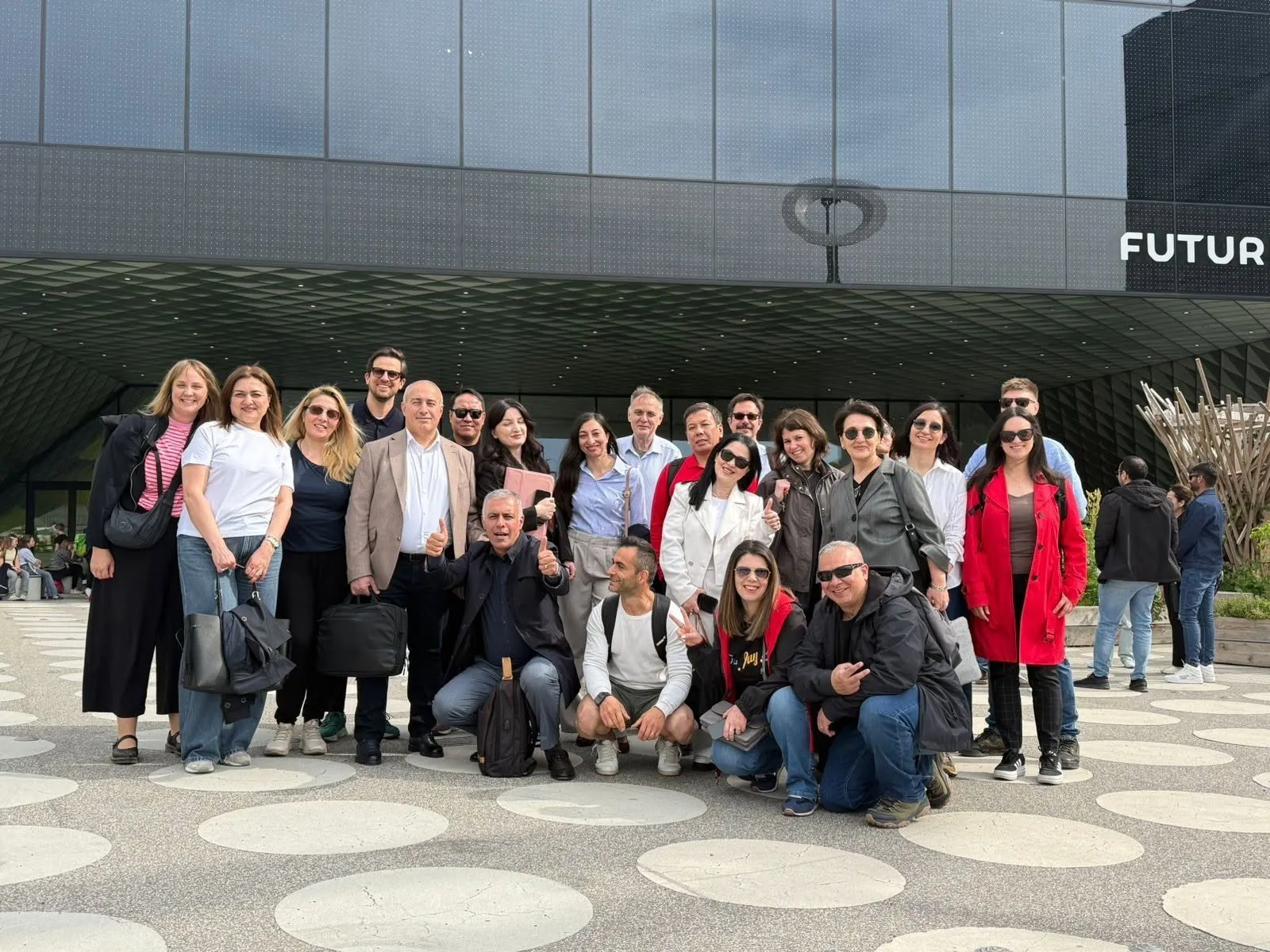
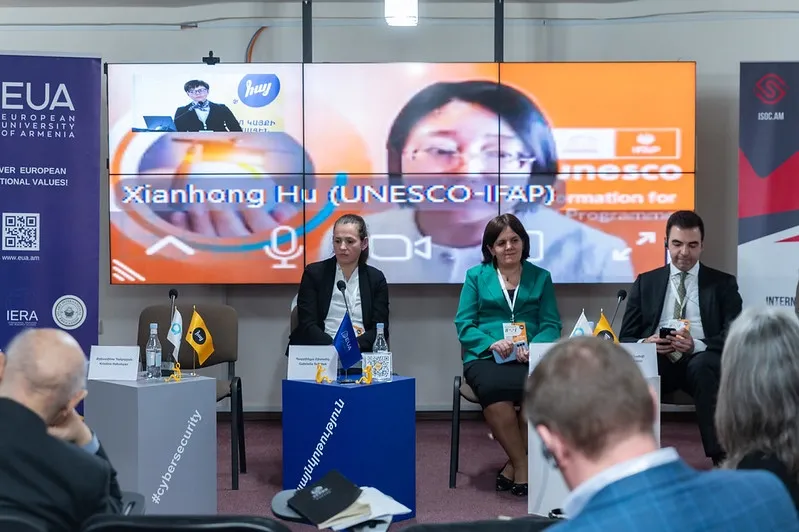
This message was emphasized by Guilherme Canela, Director of UNESCO’s Division for Digital Inclusion, Policies and Digital Transformation, during the UADay2026 regional conference held in Yerevan.
In a video address from Paris, Canela welcomed conference participants and praised the efforts of the organizing Internet Society NGO, highlighting the important role of the Universal Acceptance (UA) movement in advancing global digital inclusion.
“UA is directly connected to the United Nations’ Global Digital Compact and the WSIS+20 process. Their objective is to ensure everyone can fully participate in digital life, regardless of language or cultural background,” Canela stated.
The UNESCO representative also noted that UNESCO, in cooperation with ICANN, is actively promoting the Universal Acceptance agenda to ensure digital systems recognize and support all languages and writing systems.
“Language is not only a means of communication, but also a cornerstone of cultural identity and knowledge. Linguistic diversity is essential for building inclusive knowledge societies,” he added.
Canela further highlighted the importance of initiatives carried out within the framework of the International Decade of Indigenous Languages, aimed at protecting and promoting indigenous languages in digital environments. According to him, special attention is being given to inclusive language technologies, artificial intelligence and the digitization of low-resource languages.