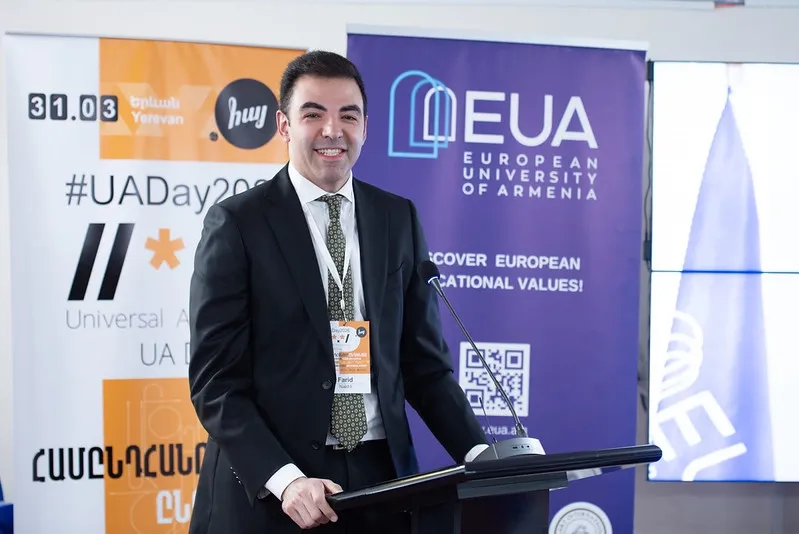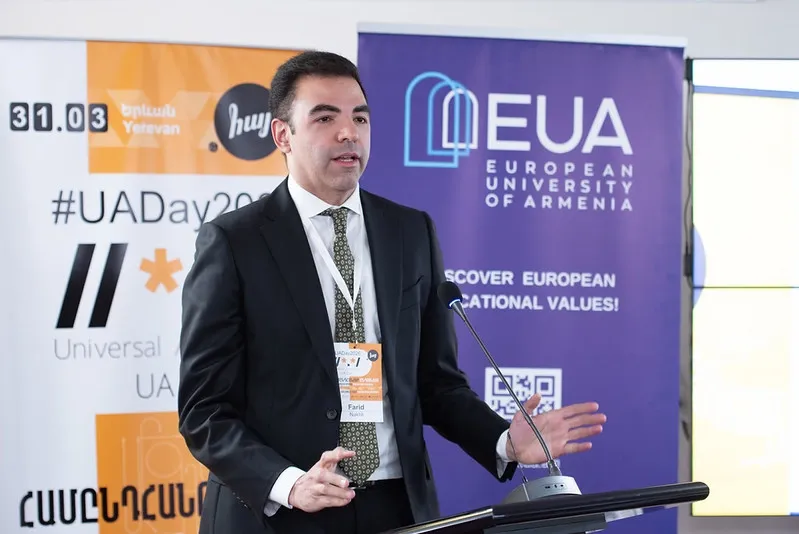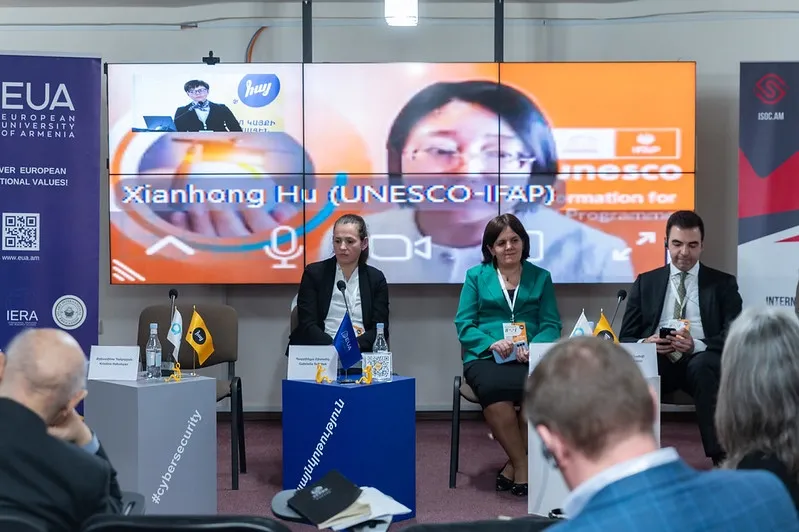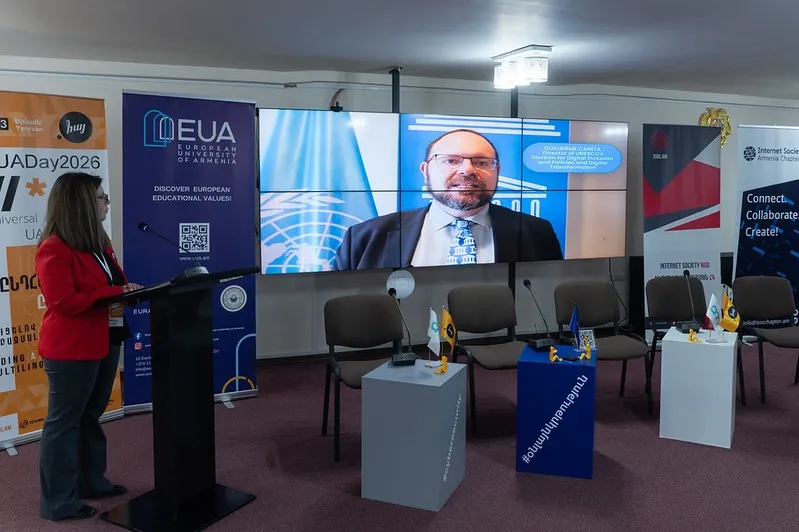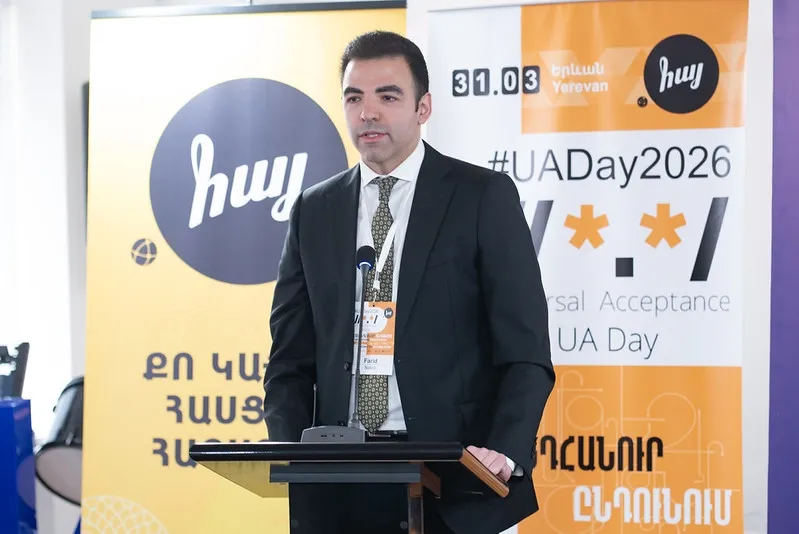
At the ITU there is a clear understanding that the global Internet extends far beyond infrastructure. It is a space where individuals should be able to fully access and benefit from all opportunities, regardless of their language, identity or cultural background. This was highlighted by Farid Nakhli, CIS Programme Coordinator at the International Telecommunication Union’s regional office, during a regional conference held in Yerevan.
Driven by the global Universal Acceptance (UA) movement, internationalized domain names (IDNs) and email address internationalization (EAI) have already seen partial adoption. For more than a decade, the Armenia-based Internet Society NGO has been actively contributing to efforts aimed at enabling the full use of national scripts online. Alongside addressing technical challenges, the organization also hosts the annual UA Day regional conferences in Yerevan. UA Day 2026, held under the theme “Building a Truly Multilingual Internet,” marked the fourth edition of the event, bringing together stakeholders from government, civil society, academia, business, the technical community and international partner organizations.
Speaking about regional and local initiatives marking Universal Acceptance Day, Farid Nakhli emphasized their importance in adapting the global agenda to local contexts and turning the vision of a multilingual Internet into practical, country-level solutions. In this context, Armenian conferences have established themselves as an effective forum for discussing UA-related issues, exploring solutions and sharing best practices.
He also highlighted the importance of ensuring linguistic diversity in artificial intelligence systems, including large language models, as a means of preventing digital inequality and bias.
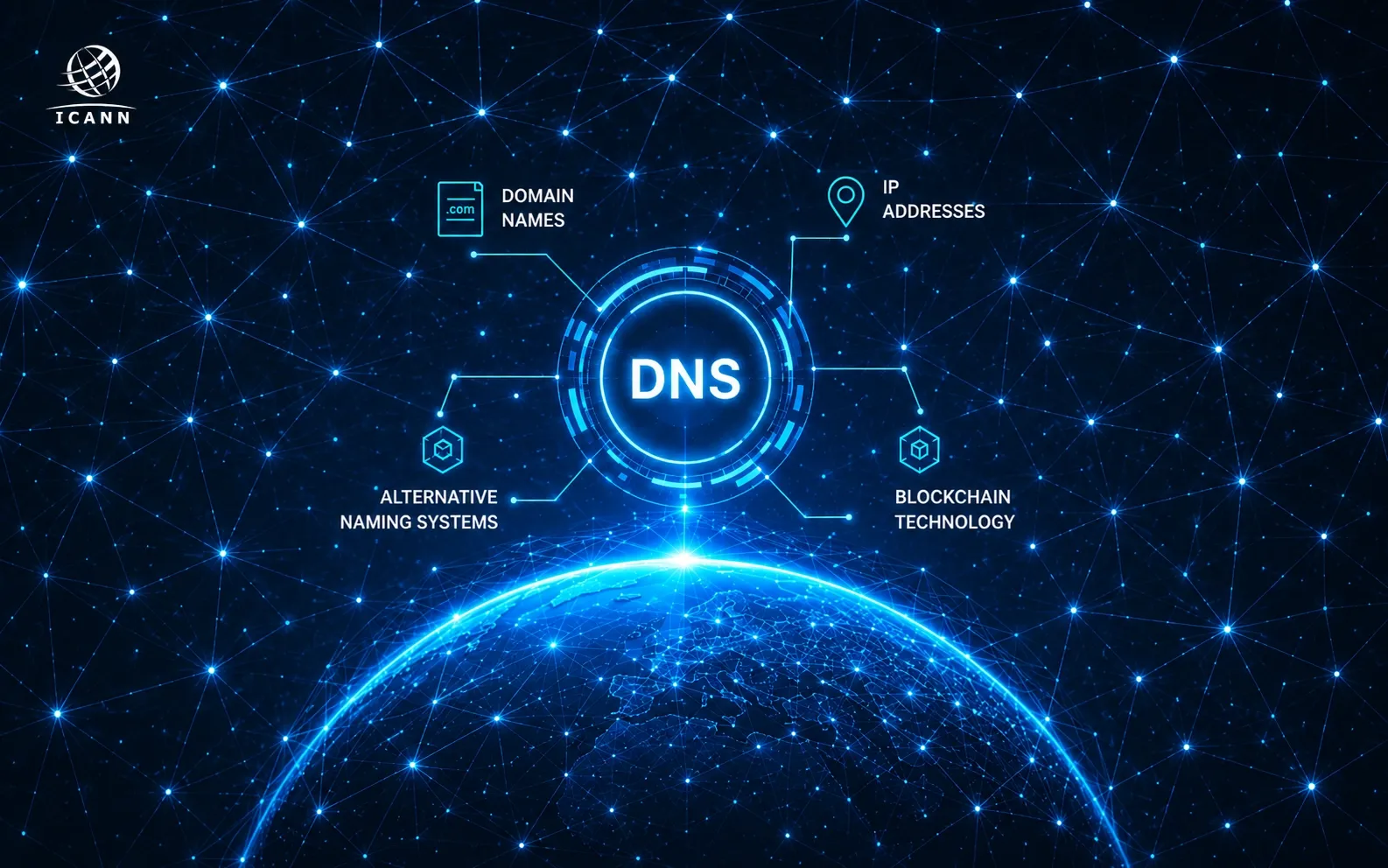
Promoting multilingualism in internationalized domain names (IDNs) and email addresses (EAIs) remains a key priority within the global digital agenda. This objective was first articulated in 2005 at the World Summit on the Information Society (WSIS+20) in Tunis and was reaffirmed at the end of last year during the United Nations General Assembly’s WSIS+20 session, through a document presented by the Internet Corporation for Assigned Names and Numbers (ICANN).